
Lessons to Missionaries to Resistant Peoples Part 2: Can you find an Elisha?

When Elijah was discouraged enough to ask God to let him die (and I’ve been there) God confronted him with the big question: “What’s your problem, man?” (a loose rendering of “What doest thou here, Elijah?” I Kings 19:9). Elijah’s response was, “Nobody loves God but me and no matter how much I preach they just want to kill me! I got no fruit for my labor!”

So, I get it. You can’t win all of Israel…or Pakistan…or Senegal…or Tunisia. No matter how many people you talk to, one after one, they reject you with the same arguments that they’ve memorized since a child: “Mohammed is the seal of the prophets!” “Jesus didn’t die! But someone who looked like him.” “The Bible has been changed.” blah blah blah.

If you focus on all of them and the daily rejections of the presentation of the Gospel (and I do hope you are giving it out daily) you’ll find yourself just like Elijah. So the common missionary response is to lament, “There are no good Tunisians.” ‘These Muslims are hard, hard, hard.” “It’s not like the Philippines over here, ya know!” But these just build a negative attitude and don’t bring any real spiritual victory for yourself or any real change in the country.

How, then, can we leave a lasting change in a hard place? Answer: forget gathering a great crowd and start building a great man…or…you can’t convince all of Israel but can you train Elisha? God did not comfort Elijah with a solution to his problem (though he did reveal to him that he has 700 men who had not bowed their knee to Bail) but he gave him a whole new perspective: “Go anoint a man to train to be a prophet in your place.” That man was Elijah. He was a farmer, not a prophet. He was a country boy from the wilderness. he wasn’t much but he was one. And he was one ready to learn and ready to pay the price. Elijah spent the rest of his life with Elisha and God did even greater things with Elisha than Elijah.

I was in the center of town earlier this week to meet a guy who we had given a Bible to earlier last week. He seemed so interested and in my mind I had already seen him converted, baptized, and signed up for seminary! But he didn’t come. I was tempted to be discouraged because we would only have 4 nationals in church that Sunday and I was hoping he’d make it 5. But instead of dispairing God’s Spirit softly spoke to my heart and reminded me of the story of Elisha. So I looked to my left and there was Mbarak, a young man in his early twenties who accepted Christ last year and had come with me to give this guy a Bible. He is from an family in a town in Morocco that everyone jokes about for it’s backwardness. His family doesn’t have much money. He’s from the wilderness. But, like Elisha, he’s ready to do anything to serve God. He spent about 30 hours with me just last week. If God never uses my preaching here to build a great crowd, it will be alright because he is using me to build a great man of God…and he’ll stand and preach in my place long after I’m gone.

So, you can’t win the whole country but can you find an Elisha?

Posted in Ministry | Tagged | Comments Off on Lessons to Missionaries to Resistant Peoples Part 2: Can you find an Elisha?

Lessons to Missionaries to Resistant Peoples Part 1: Rejoice in the Sowing

The majority of cities and villages in the world that remain unreached with the Gospel are in such a condition in part because they are resistent to the Gospel. Islam is the largest religious group of unreached peoples and Hindus make up the majority of what is left of the task of world evangelism. So we are beginning to focus on those places with no churches in the Muslim and Hindu world as missions-minded churches and missionaries. That is good. However, along with this invigorating goal of reaching the last of the unreached comes great discouragement at how their religions have prepared them against the Gospel.
Working now for five years in North Africa I have gone through my own struggles with discouragement and frustration with these people and now I am watching my friends go through it. The tendency is to blame ourselves (our lack of a winning personality or strategy) or blame them (in the sense that they’ll never be reached). However, there are a few lessons I have learned that have helped keep my mind focused on the task and my heart encouraged. Because with a discouraged heart, a mind cannot concentrate effectively.

Lesson #1: Rejoice in the Sowing

The main text to be considered is Ecc. 11 (at the bottom of this post). With zeal the new missionary starts sharing Christ with his Muslim friends around him (or at least he should). Within the first two years, if he dreams are dashed in the harsh reality of the harvest. We don’t sow today to reap today. We sow today to reap tomorrow. Tomorrow in terms of real harvest happens once a year. Tomorrow in terms of reaching people for Christ may come next year, may come next term, may come after I die.

So what? Am I to work sad and discouraged until I SEE the fruit the sowing?

No! Faith is not sight! Faith says, “Rejoice now with every seed you sow knowing that God will bring a harvest.” Doubt in God says, “Well, I’m giving this guy the Gospel but he probably won’t respond. Few every have.” A new church in a Muslim city with no church will take great faith! It will take the same faith on our part to plant that church as it will take on the part of the Muslim who leaves every social blanket he has to come to Christ.

So rejoice. Everyday leave your home and share Christ. Try 100 different ways to do it. Try all these ways on all different earth around you: rich people, poor people, students, laborers, bums, everybody! And rejoice while doing it because God is going to bring fruit and fruit that remains. He has promised. The gentiles will hear! (Acts 28:28) So, off to give some Bibles out now…

Ecc 11: Cast thy bread upon the waters: for thou shalt find it after many days. 2 Give a portion to seven, and also to eight; for thou knowest not what evil shall be upon the earth. 3 If the clouds be full of rain, they empty themselves upon the earth: and if the tree fall toward the south, or toward the north, in the place where the tree falleth, there it shall be. 4 He that observeth the wind shall not sow; and he that regardeth the clouds shall not reap. 5 As thou knowest not what is the way of the spirit, nor how the bones do grow in the womb of her that is with child: even so thou knowest not the works of God who maketh all. 6 In the morning sow thy seed, and in the evening withhold not thine hand: for thou knowest not whether shall prosper, either this or that, or whether they both shall be alike good. 


Posted in Ministry, Missions | Tagged | Comments Off on Lessons to Missionaries to Resistant Peoples Part 1: Rejoice in the Sowing

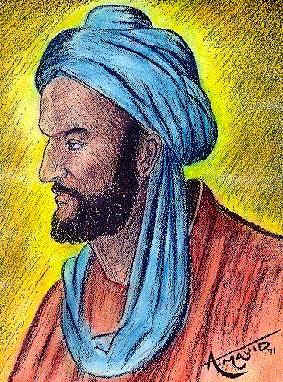
What sayest thou? Is Mohammed a prophet?

This question posed to the typical Westerner has an easy answer: no…for many reasons. However, for the Christian who is a missionary at heart trying to bring Muslims to Christ the simple answer of “no” closes the door to the Muslim’s heart and mind. The Muslim will immediately judge the Christian as a “kafar” (infidel) and unbeliever in God and his prophet.

To help you better understand, it would be like going to your closest family or friend who is Catholic and telling them, “You know that the Pope is really a wicked idolator who is deceiving you and a sixth of the earth’s population, right?” Of course this is true but not very useful for evangelistic purposes.

My friend Said was confronted by this question a couple days ago. We were in a heated debate with about five or six Muslims present, one I had tried to witness to. Of them all, one was belligerent and asked Said the big question in a loud accusatory voice, “Just tell me one thing…do you believe in Mohammed the prophet?” A positive answer would make Said’s witness void for he would then be a Muslim. A negative answer would bring the law against him since nothing angers a Muslim like criticizing their beloved prophet (hence the killings after the cartoons in Denmark). Anytime that Said answers in the negative, this could be used against him before a judge and he could be accused of attacking Islam.

Jesus face similar questions by spies of the Pharisees in Luke chapter 20. They asked him, “Should we pay taxes to Cesar?” and “By what power do you do these things? Who has given you this authority?” These were questions meant to be traps. A simple answer either in the positive or negative would have spelled disaster. Jesus wisely answered with either a question (in the case when they questioned his authority) or a logical illustration to defuse the heat of the question (in the question of taxes).

Yesterday I was talking to my mechanic Khalid over lunch and telling him how Christian pray. He had a very typical question: “Do you believe in Mohammed?” His was not a question to cause anger in others or to have reason to bring me before a judge for criticizing Islam, rather he was confused by my apparent piety and wanted to put me into a box: believer or nonbeliever. He had learned that the way to do this was determining what the subject thinks about Mohammed, the seal of the prophets (in popular opinion).

So my response, which I would like to encourage as an example, was this:

“Khalid, you have asked me about the last prophet, no? Well, we cannot start by examining the last prophet. We must start at the beginning with the first. What wise man would begin at the end? So the first prophet, who was he?”

“Adam, the first man.”

“Yes. Exactly. Let’s look at what truths God taught us through Adam and move forward. When we get to the end, I would be glad to tell you just what I think about the last prophet.”

Khalid thought that made sense and we began by opening up the Bible to the book of Genesis. From there I explained to him in rather short form how Christ is the fulfillment of the prophecies and the answer to the sin problem present since Adam. I explained how Christ was the Word made flesh and how he fulfilled every need we have always had. By the end, Khalid had forgotten his question about Mohammed being confounded by so many things he had never considered before using both the Holy Scriptures, logic, and his own conscience as his guide. We left that lunch with Khalid not thinking that I was an unbeliever though he still didn’t know my opinion on Mohammed. Later he will know.

As a side note, I have known Catholics who have come to Christ and have not removed the picture of the Pope from their home until a couple of years later. The point is that neither Mohammed nor the Pope is the key figure for us to understand. We must point to Christ and avoid with wisdom a question that would cut off our witness to 1.5 billion Muslims

Posted in Ministry | Tagged | Comments Off on What sayest thou? Is Mohammed a prophet?